
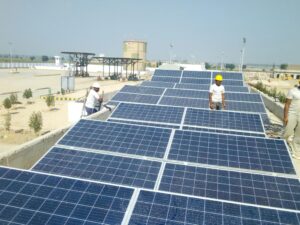
Africa is sitting on one of the greatest energy opportunities in the world. While millions of homes still go without reliable electricity, the sun shines overhead every single day — free, powerful, and ready to use. This guide explains exactly what solar energy is, how it works step by step, why it matters so much for Africa, and what you need to know before buying a solar system.
Whether you are a student, a homeowner, a business owner, or just someone curious about solar power, this article will give you a clear and honest picture of everything solar energy in Africa.
Table of Contents
1. What Is Solar Energy?
2. How Solar Energy Works: The Science in Simple Terms
3. How a Complete Solar System Works Step by Step
4. Africa’s Solar Advantage: Sun Radiation Data by Region
5. Types of Solar Systems Used Across Africa
6. What Can Solar Power in Your Home or Business?
7. How to Size a Solar System for an African Home
8. Why Solar Energy Is Critical for Africa’s Future
9. Real Costs of Going Solar in Africa
10. Common Challenges and How to Overcome Them
11. How to Spot Quality Solar Products vs. Fake Ones
12. The Long-Term Future of Solar in Africa
13. Frequently Asked Questions
What Is Solar Energy?
Solar energy is electricity or heat that is produced from sunlight. The sun produces a massive amount of energy every second through a process called nuclear fusion — where hydrogen atoms combine to form helium and release huge amounts of light and heat energy.
A tiny fraction of that energy reaches the Earth. But even that tiny fraction is enormous. In fact, the amount of solar energy that hits the Earth in just one hour is enough to power the entire world for a whole year.
For Africa specifically, this is incredibly important. Large parts of the continent receive between 5 to 7 kilowatt-hours (kWh) of solar radiation per square meter per day. To put that in simple terms — African countries get some of the strongest and most consistent sunlight of anywhere in the world. Countries like Nigeria, Ghana, Zambia, Mozambique, and Tanzania are perfectly positioned to take advantage of this energy.
Compare that to Germany, one of the world’s biggest solar energy users, which receives only about 2.5 to 3 kWh per square meter per day. Africa gets more than double the solar resource — yet Germany has far more solar installations. That gap represents a huge opportunity
How Solar Energy Works: The Science in Simple Terms
Electricity transmission line
The Photovoltaic Effect
The process that turns sunlight into electricity is called the photovoltaic (PV) effect. Here is how it works:
The sun sends out tiny particles of light called photons. When photons hit the surface of a solar panel, they knock electrons loose from atoms inside the panel’s material. This movement of electrons creates an electric current — which is electricity.
Solar panels are made mostly from silicon, a material found in sand. Silicon is what scientists call a semiconductor — meaning it can either conduct electricity or block it, depending on conditions. This makes it perfect for capturing sunlight and turning it into a controlled electric current.
The Structure of a Solar Cell
Each solar panel is made up of many individual solar cells. Here is what each cell contains:
– Two layers of silicon— one with extra electrons (called N-type) and one with fewer electrons (called P-type)
– When sunlight hits the cell, electrons move from the P-type layer toward the N-type layer
– This movement creates a direct current (DC)— electricity that flows in one direction
Many cells are connected together to make one solar panel. Many panels are connected together to make a solar array.
DC vs. AC Electricity
The electricity produced by solar panels is Direct Current (DC). However, most household appliances — your TV, fridge, lights, and phone charger — run on Alternating Current (AC).
This is why every solar system needs an inverter — a device that converts DC electricity into AC electricity that your home can use.
How a Complete Solar System Works: Step by Step
A standard solar system in Africa has several key components that work together. Here is how the process flows from sunlight to powered appliances:
Step 1: Solar Panels Capture Sunlight
The solar panels on your roof or on a ground mount absorb sunlight and produce DC electricity. The amount of electricity they produce depends on:
– The size and number of panels
– The angle and direction they face (south-facing is best in the Southern Hemisphere; north-facing in the Northern Hemisphere)
– The strength of sunlight (called irradiance) reaching them
– Temperature — solar panels actually work slightly better on cool, sunny days than extremely hot days
Step 2: The Charge Controller Protects the Battery
The DC electricity from the solar panels flows into a charge controller before reaching the battery. The charge controller does two important jobs:
1. Prevents overcharging — It stops electricity from flowing into the battery once the battery is full. Overcharging damages batteries quickly.
2. Prevents over-discharging — It stops too much electricity from being drawn out of the battery, which can also damage it.
There are two main types of charge controllers:
| Type | Full Name | Efficiency | Best For |
| PWM | Pulse Width Modulation | 70–80% | Small, budget systems |
| MPPT | Maximum Power Point Tracking | 93–97% | Larger systems, better value long-term |
MPPT controllers are more expensive upfront but they squeeze significantly more power out of your solar panels. For most African home and business installations above 500W, MPPT is the recommended choice.
Step 3: The Battery Bank Stores Energy
The battery bank stores the electricity so you can use it at night or on cloudy days. Batteries are measured in:
– Amp-hours (Ah)— how much electricity they can store
– Voltage (V) — the electrical pressure they operate at (commonly 12V, 24V, or 48V systems)
Types of batteries used in Africa:
– Lead-acid (flooded) — the cheapest option, but requires maintenance and ventilation
– AGM (Absorbent Glass Mat)— sealed, maintenance-free, more expensive than flooded
– Gel batteries — good for deep cycling but sensitive to overcharging
– Lithium (LiFePO4) — the best technology available today; longer lifespan (10+ years), lighter, safer, and increasingly affordable
Lithium batteries are now the gold standard for solar storage in Africa, especially as prices have dropped significantly over the last five years.
Step 4: The Inverter Converts DC to AC
The inverter takes DC electricity from the battery bank and converts it into AC electricity for your appliances. Inverters are rated in watts (W) or kilowatts (kW) based on how much power they can handle at once.
Types of inverters
– Pure sine wave inverters — produce clean, smooth electricity identical to grid power. Compatible with all appliances. Recommended for all quality installations.
– Modified sine wave inverters — cheaper but can damage sensitive electronics like some motors, medical equipment, and audio systems.
Always choose a pure sine wave inverter for a reliable and safe solar system.
Step 5: The Distribution Board Supplies Power Throughout the Building
The AC electricity from the inverter goes into the distribution board (DB board), which is the electrical panel that routes power to different circuits in your home or business — lighting, sockets, appliances, and so on.
A proper DB board installation also includes safety features like:
– Circuit breakers— cut power automatically if there is a fault
– Surge protection devices (SPDs) — protect your electronics from voltage spikes
Africa’s Solar Advantage: Sun Radiation Data by Region
One of the most important factors in solar energy performance is something called Global Horizontal Irradiance (GHI)— the total amount of solar energy received per square meter per day, measured in kilowatt-hours (kWh/m²/day).
Here is a breakdown of solar radiation levels across different African regions:
North Africa — Exceptional Solar Resource
| Country | Average GHI (kWh/m²/day) |
| Egypt | 5.5 – 7.0 |
| Libya | 5.8 – 7.2 |
| Morocco | 5.0 – 6.5 |
| Algeria | 5.5 – 7.0 |
The Sahara Desert region has some of the highest solar radiation of anywhere on Earth. Egypt and Morocco have become major solar energy producers and exporters on the continent.
West Africa — Strong and Consistent
| Country | Average GHI (kWh/m²/day)
| Nigeria | 4.5 – 6.5 |
| Ghana | 4.5 – 6.0 |
| Senegal | 5.0 – 6.5 |
| Mali | 5.5 – 7.0 |
Nigeria, despite being Africa’s largest economy and most populous country, still suffers massive electricity shortfalls. Solar is not just an option here — it is rapidly becoming the primary power source for millions of households and businesses.
East Africa — Growing Solar Market
| Country | Average GHI (kWh/m²/day) |
| Kenya | 4.5 – 6.5 |
| Ethiopia | 5.0 – 7.0 |
| Tanzania | 4.5 – 6.5 |
| Uganda | 4.5 – 5.5 |
Kenya has emerged as one of Africa’s solar energy leaders, with widespread adoption of solar home systems and increasingly large utility-scale projects.
Southern Africa — Premium Solar Conditions
| Country | Average GHI (kWh/m²/day) |
| Namibia | 6.0 – 7.5 |
| Botswana | 5.5 – 7.0 |
| South Africa | 4.5 – 6.5 |
| Zambia | 5.0 – 6.5 |
| Zimbabwe | 5.0 – 6.5 |
Namibia has some of the best solar resources in the world. South Africa has developed a large and sophisticated solar industry, offering useful lessons for the rest of the continent.
Central Africa — Viable but Slightly Lower
The Congo Basin and parts of Central Africa receive slightly lower solar radiation due to cloud cover and rainforest humidity, averaging around 4.0 – 5.5 kWh/m²/day. This is still well above European averages and more than sufficient for effective solar energy generation.
The bottom line: Every African country receives enough sunlight to make solar power a practical and cost-effective solution — regardless of geography.
Types of Solar Systems Used Across Africa
Different situations call for different solar system designs. Here are the three main types used across the continent:
Off-Grid Solar Systems
Best for: Rural homes, farms, clinics, schools, and any location without access to a national electricity grid.
An off-grid system is completely independent. It generates its own electricity, stores it in batteries, and supplies power with no connection to any utility. These systems must be carefully sized to meet all of a user’s electricity needs — because there is no backup from the grid.
Key characteristics
– Must have enough battery storage to cover nights and cloudy days (typically 2–3 days of backup)
– Requires a larger solar array and battery bank than grid-tied systems
– Higher upfront cost but zero electricity bills forever
– Ideal for remote locations where grid connection is unavailable or very expensive
Off-grid solar has already transformed life in rural Africa. Solar-powered water pumps, solar-charged phones, solar lights, and solar refrigerators are changing communities across the continent.
Grid-Tied Solar Systems
Best for: Urban homes and businesses in areas with a reliable, stable electricity grid.
A grid-tied system is connected to the national electricity grid. During the day, solar panels produce electricity. Any excess electricity that the system produces but the home does not need can be fed back into the grid — and in some countries, the utility company pays you for this (called net metering).
At night, when the solar panels are not producing, the system draws electricity from the grid as normal.
Key characteristics
– No batteries required (though batteries can be added)
– Lower upfront cost than off-grid or hybrid
– Reduces electricity bills significantly
– Does NOT provide backup during grid power outages (unless batteries are added)
– Countries with net metering include South Africa, Kenya, Namibia, and others
Hybrid Solar Systems
Best for: Urban and semi-urban areas where the grid exists but is unreliable — which describes most of sub-Saharan Africa.
A hybrid system combines solar panels, a battery bank, AND a connection to the grid (and sometimes a backup generator as well). This gives the best of all worlds:
– Solar panels reduce daytime electricity costs
– Batteries provide backup when the grid fails (load-shedding, blackouts)
– The grid acts as a secondary source when solar and batteries run low
– A generator can be configured as a last resort
This is the most popular and practical system type for African urban and suburban homes and businesses. Given that countries like Nigeria, Ghana, South Africa, and Zimbabwe experience frequent power outages, hybrid systems offer both cost savings and energy security.
What Can Solar Power in Your Home or Business?
One of the most common questions people ask is: “What exactly can my solar system run?”
The answer depends on the size of your system. Here is a practical guide:
Small System (300W – 1,000W Solar / 100–200Ah Battery)
Suitable for: Basic lighting and phone charging
– LED lights (6–10 bulbs)
– Phone and tablet charging
– Small radio or TV (LED type)
– Small fans
– Basic security system
Typical cost range: $200 – $600 USD
Medium System (1,000W – 3,000W Solar / 200–400Ah Battery)
Suitable for: Standard home use
– All of the above plus:
– Satellite TV and decoder
– Laptop computers
– Medium-sized LED TV
– Small refrigerator (energy-efficient)
– Ceiling fans
– WiFi router
Typical cost range: $800 – $2,500 USD
Large System (3,000W – 8,000W Solar / 400–800Ah Battery)
Suitable for: Full home or small business
– All of the above plus:
– Full-size refrigerator and freezer
– Multiple air conditioners (during the day)
– Washing machine
– Water pump
– Power tool’s
Typical cost range: $3,000 – $10,000 USD
Very Large / Commercial System (8kW+)
Suitable for: Businesses, factories, schools, hospitals, filling stations
– Industrial equipment
– Multiple air conditioning units
– Production machinery
– Cold rooms
– Water treatment systems
Typical cost range: $10,000 – $100,000+ USD
How to Size a Solar System for an African Home
Sizing a solar system properly is one of the most important steps. An undersized system will let you down; an oversized system wastes money. Here is a simple method:
Step 1: List All Your Appliances and Their Power Ratings
| Appliance | Power (Watts) | Hours Used Per Day | Daily Energy (Wh) |
| LED lights (x6) | 60W total | 5 hours | 300 Wh |
| TV (LED, 32″) | 80W | 4 hours | 320 Wh |
| Fridge | 150W | 8 hours* | 1,200 Wh |
| Phone charging | 30W | 2 hours | 60 Wh |
| Fan (ceiling) | 75W | 6 hours | 450 Wh |
| TOTAL | | | 2,330 Wh/day|
Fridges cycle on and off, so actual consumption is roughly 50% of running wattage.
Step 2: Add a Safety Factor
Multiply your daily total by 1.25 to account for system losses (wiring, inverter efficiency, etc.):
2,330 Wh × 1.25 = 2,912 Wh/day (approximately 3 kWh/day)
Step 3: Calculate Solar Panel Size
Divide your daily energy need by the number of effective sun hours in your location. For most of Africa, this is 4–6 hours.
Using 5 peak sun hours: 2,912 Wh ÷ 5 hours = 582W of solar panels
Round up to the nearest standard size: 600W or 800W solar array (to have a safety margin).
Step 4: Calculate Battery Size
For 1 day of backup (recommended minimum for urban hybrid systems):
2,912 Wh ÷ 48V system voltage = 60.6 Ah at 48V
For a 24V system: 2,912 Wh ÷ 24V = 121 Ah
Add a depth-of-discharge factor: For lithium (80% DoD), divide by 0.8 → 152 Ah. For lead-acid (50% DoD), divide by 0.5 → 242 Ah.
Step 5: Choose the Right Inverter
Your inverter must handle the peak load — all appliances that might run at the same time. Add up the wattage of everything that could run simultaneously and choose an inverter rated at least 20–30% above that figure.
Read: Is solar energy worth it in Africa
Why Solar Energy Is Critical for Africa’s Future
The Energy Poverty Problem
Today, approximately 600 million people in Africa still do not have access to reliable electricity. That is more than half the continent. Without electricity:
– Students cannot study at night
– Businesses cannot operate efficiently
– Hospitals cannot reliably run equipment
– Food spoils without refrigeration
– Water cannot be pumped and purified at scale
This energy gap is one of the biggest barriers to economic development across the continent.
Why the Grid Cannot Solve This Alone
Extending traditional electricity grid infrastructure across Africa’s vast and sometimes difficult terrain is extremely expensive. Building new power stations, transmission lines, and distribution networks costs billions of dollars and takes decades.
Solar, on the other hand, is decentralized — meaning each home, school, or business generates its own electricity without needing long transmission lines. This makes it far faster and cheaper to deploy, especially in rural areas.
Africa’s Energy Situation by the Numbers
– Africa has 17% of the world’s population but generates only about 3% of global electricity
– Sub-Saharan Africa has an electrification rate of roughly 48%— meaning more than half the region has no grid electricity
– The cost of diesel fuel for private generators costs African businesses and households billions of dollars every year
– Solar power can reduce electricity costs by 50–80% compared to diesel generation
Environmental Benefits
Africa contributes very little to global carbon emissions historically — yet African countries suffer some of the worst effects of climate change, including droughts, floods, and extreme weather. By building its energy future on solar and renewable energy, Africa can power its development without adding to the global carbon problem.
Solar panels produce electricity with zero emissions during operation. Over the lifespan of a solar panel, the energy it produces creates up to 95% fewer carbon emissions than electricity from a coal or diesel power plant.
Economic Benefits
Beyond energy security, solar creates jobs. The solar industry requires:
– System designers and engineers
– Installation technicians
– Sales and distribution networks
– Maintenance and repair professionals
– Local manufacturing opportunities
Countries that build strong solar industries create skilled employment and reduce their dependence on imported fossil fuels — strengthening both their economies and their energy security.
Real Costs of Going Solar in Africa
One of the most common barriers to solar adoption is the upfront cost. Let us look at what solar actually costs in Africa and how long it takes to pay back.
Cost Components of a Solar System
| Component | Typical Cost Range | Notes |
|———–|——————-|——-|
| Solar panels | $0.25 – $0.50 per watt | Prices have dropped over 90% in the last decade |
| Inverter/charger | $200 – $2,000+ | Depends on brand and capacity |
| Lithium batteries | $400 – $4,000+ | Depends on capacity |
| Lead-acid batteries | $100 – $800+ | Cheaper upfront, shorter lifespan |
| Charge controller | $30 – $300 | MPPT recommended |
| Mounting and wiring | $100 – $500 | Depends on roof type |
| Installation labor | $100 – $500+ | Varies by country and complexity |
Payback Period
The solar payback period is how long it takes for your savings on electricity to cover the original cost of installation.
For a typical African home switching from generator use:
– Generator fuel cost: $100–$300/month
– Solar system cost: $2,000–$5,000 installed
– Payback period: 12–36 months
After payback, the electricity is essentially free. Solar panels last 25–30 years with minimal maintenance. This means 20+ years of very low-cost electricity after the system pays for itself.
Financing Options
Paying for a solar system upfront is not always possible. Fortunately, financing options are growing across Africa:
– Bank loans — available in South Africa, Kenya, Nigeria, and others
– Solar leasing / pay-as-you-go (PAYG) — companies like M-KOPA, Greenlight Planet, and d.light offer systems with small daily or monthly payments via mobile money
– Government subsidies and programs — several African governments now offer incentives for solar adoption
– NGO and development finance — organizations like the World Bank, African Development Bank, and various NGOs fund solar projects for rural communities, schools, and clinics.
Common Challenges and How to Overcome Them
Solar energy is not without its difficulties. Here is an honest look at the challenges and practical solutions:
Challenge 1: High Upfront Cost
The problem: A quality solar system requires significant capital investment.
The solution: Explore financing options (PAYG, loans, leasing). Also remember to calculate the total cost of ownership — many people already spend significant money on generator fuel, diesel, and grid bills. A solar system often costs less over time even if it costs more upfront.
Challenge 2: Poor-Quality Products Flooding the Market
The problem: Africa’s solar market is full of counterfeit and low-quality panels, batteries, and inverters that fail quickly and damage other components.
The solution: Always buy from reputable suppliers with verifiable certifications. Look for IEC-certified panels, UL or CE-certified inverters, and batteries with clear cycle-life specifications. We will cover how to spot quality products in the next section.
Challenge 3: Battery Replacement Costs
The problem: Lead-acid batteries typically last only 2–4 years in tropical conditions if not maintained properly. This creates ongoing replacement costs.
The solution: Invest in quality batteries from the start. Lithium batteries cost more upfront but last 8–15 years — making the total cost far lower. Also ensure proper charge controller settings to protect battery life.
Challenge 4: Lack of Skilled Technicians
The problem: Especially in rural and peri-urban areas, finding trained solar installers who understand system design and safe installation is difficult. Poor installation leads to system failures, fires, and wasted money.
The solution: Always hire certified installers. Ask to see their training credentials or certifications. Organizations like the South African Photovoltaic Industry Association (SAPVIA), Kenya’s Renewable Energy Association, and others provide installer certification programs.
Challenge 5: Dust, Heat, and Weather
The problem: In many parts of Africa, dust accumulation on solar panels reduces output. Very high temperatures also slightly reduce panel efficiency.
The solution:
– Clean panels regularly (monthly during dry seasons) with clean water and a soft cloth
– Ensure proper mounting with good airflow beneath the panels (airflow keeps them cooler and more efficient)
– Use panels with high temperature coefficients for hot climates
How to Spot Quality Solar Products vs. Fake Ones
Africa’s solar market has a serious quality problem. Cheap, substandard products are common. Here is how to protect yourself:
Solar Panels: What to Look For
Good signs
– Panel has a nameplate with clear specifications (wattage, voltage, current, temperature coefficient)
– The brand has a verifiable website and international presence
– Panel carries IEC 61215 or IEC 61730 certification
– Comes with a 25-year performance warranty and a 10-year product warranty
– The cells are uniform in color with no visible defects
Red flags
– Panel is unusually cheap (far below market price)
– No nameplate or missing specifications
– No warranty documentation
– Uneven or discolored cells
– Very thin, lightweight frames that bend easily
Batteries: What to Look For
Good signs
– Clear labeling with brand, capacity (Ah), voltage, and date of manufacture
– For lithium batteries: includes a Battery Management System (BMS)
– Manufacturer has verifiable test certifications (UN38.3 for lithium, etc.)
– Distributor can explain cycle life and warranty terms clearly
Red flags
– Battery is significantly heavier or lighter than specified (could indicate filled with water or sand in extreme fraud cases)
– No date of manufacture (old batteries sold as new)
– Suspiciously high claimed capacity at a very low price
– No documentation or warranty papers
Inverters: What to Look For
Good signs
– CE, UL, or VDE certification marks
– Pure sine wave output (specified clearly)
– Clear efficiency rating (should be 90%+ for quality units)
– Proper ventilation and cooling system
– Established brand with after-sales support in your country
Red flags
– No certification marks
– Claims very high output at suspiciously low price
– No after-sales service or warranty support
– Overheats quickly during operation.
The Long-Term Future of Solar in Africa
Investment Is Accelerating
International investment in African solar is growing rapidly. The African Development Bank, World Bank, and private investors from Europe, China, the Middle East, and North America are all funding large-scale solar projects across the continent.
Some notable developments:
– Egypt’s Benban Solar Park is one of the largest solar parks in the world, with over 1.6 GW of capacity
– Morocco’s Noor Ouarzazate complex is a world-leading concentrated solar power (CSP) project
– South Africa’s Renewable Energy Independent Power Producer Programme (REIPP) has brought over 6,000 MW of renewable energy online
– Kenya, Nigeria, Ghana, and Tanzania are all seeing rapid growth in solar project pipelines
Technology Is Getting Better and Cheaper
The price of solar panels has fallen by more than 90% since 2010 and continues to decline. Battery technology is improving rapidly — lithium battery prices have dropped by over 80% in the last decade and are expected to keep falling.
New solar technologies on the horizon include:
– Perovskite solar cells— potentially cheaper and more efficient than traditional silicon
– Bifacial panels — panels that capture light from both sides, increasing output
– Solar glass and building-integrated photovoltaics (BIPV)— solar panels built directly into building materials
– Next-generation solid-state batteries — even safer and longer-lasting than current lithium batteries
Africa as a Solar Energy Exporter
In the long term, Africa has the potential not just to power itself with solar — but to export clean electricity to Europe and the rest of the world through high-voltage interconnections. Projects like the Xlinks Morocco-UK Power Project, which aims to send Saharan solar energy via undersea cable to the United Kingdom, show what is possible.
The Bottom Line
Solar energy is not a temporary trend or a development charity project. It is a permanent, accelerating shift in how energy works — and Africa is positioned to be one of the biggest winners. The combination of Africa’s exceptional solar resource, declining technology costs, growing investment, and massive unmet electricity demand creates a powerful opportunity.
Solar energy is not just practical for Africa. For tens of millions of people, it is becoming the most practical option available.
Frequently Asked Questions
Can solar panels work on cloudy days?
Yes. Solar panels still produce electricity on cloudy days, just at reduced output — typically 10–30% of their rated capacity depending on cloud thickness. This is why good battery storage is important for continuous power supply.
How long do solar panels last?
Quality solar panels from reputable manufacturers are typically warranted for 25 years and can last 30+ years. They do gradually lose efficiency over time (typically 0.5–1% per year), but remain productive for decades.
Do I need permission to install solar in Africa?
Requirements vary by country and system size. Small residential systems often require minimal documentation. Larger systems may require building permits and approval from the national electricity regulator. Always check with local authorities and hire certified installers who are familiar with local regulations.
What happens to my solar system during heavy rain or storms?
Quality solar systems are weatherproof. Solar panels are tested to withstand hail, heavy rain, and high winds (typically rated to survive 140 km/h winds and 25mm hailstones). However, proper mounting and installation is essential to ensure storm resistance.
Can I add more panels to my system later?
Yes — solar systems can be expanded over time. However, it is important to design the initial system with future expansion in mind, particularly the inverter/charger capacity and battery configuration. Discuss expansion plans with your installer when buying your first system.
Is it possible to run air conditioning on solar?
Yes, but air conditioning is one of the most power-hungry appliances. Running air conditioning on solar requires a larger system. The most practical approach is to run air conditioning primarily during daylight hours when the solar panels are producing at full capacity, reducing the battery storage needed.
What is the difference between a solar panel’s peak power and actual output?
A solar panel’s rated peak power (e.g., 400W) is measured under Standard Test Conditions (STC)— 25°C panel temperature and 1,000 W/m² irradiance. In real-world African conditions, panels may operate hotter than 25°C, which slightly reduces output. Expect real-world output to be approximately 75–90% of the rated STC figure.
Conclusion
Solar energy is transforming Africa — one home, one school, one business at a time. With the strongest solar radiation in the world, a massive need for reliable electricity, and rapidly falling technology costs, Africa is entering a solar energy revolution.
Understanding how solar energy works — from the photovoltaic effect to system sizing to choosing quality components — gives you the knowledge to make smart decisions and avoid expensive mistakes.
Whether you are powering a rural home with a small off-grid system or running a large business with a hybrid solar installation, solar energy offers a reliable, clean, and increasingly affordable path to energy independence.
The sun rises in Africa every morning. The only question is whether you are ready to use it.
Related Articles:
– How to Choose the Right Solar Inverter for Africa
– Best Solar Batteries for African Climates: A Buying Guide
– How to Install a Solar System in Nigeria: Step-by-Step
– Solar Energy in South Africa: What You Need to Know in 2025
– Off-Grid vs Hybrid Solar Systems: Which Is Right for You?