
How Renewable Energy Works for Beginners
How Renewable Energy Works for Beginners
For thousand of decades since electricity was discovered, we have always been dependent on energy from fossil fuels, such as coal, petroleum and more recently gas. These sources of energy while efficient have been found to harm the earth causing global warming, thus giving rise to green house effect, that has given rise to many natural disasters bedeviling our world today.
However, the world is making the shift to renewable sources of energy, or green energy which is friendly to the environment.
Read: Off-Grid Solar Solutions in Uganda: A Complete Guide
In this article we are going to look at “how renewable energy works” especially for beginners who may not know how or what renewable energy is.
If you have ever heard terms like solar panels, wind turbines, or clean energy and wondered how any of it actually works, you are in the right place.
This guide explains how renewable energy works for beginners by the time you finish, you will understand where renewable electricity comes from, how it reaches your home, and why the world is switching to it so quickly.
Renewable energy is not complicated. It is just nature doing what it has always done — and us being clever enough to capture it.
Table of Contents
1. What Is Renewable Energy? — The basics, in simple terms
2. Key Terms You Need to Know — A quick glossary before we dive in
3. How Solar Energy Works — From sunlight to electricity
4. How Wind Energy Works — Capturing the power of moving air
5. How Hydropower Works — Electricity from flowing water
6. How Geothermal Energy Works — Heat from inside the Earth
7. How Biomass Energy Works — Energy from organic materials
8. The Pros and Cons of Renewable Energy — Honest assessment
9. The State of Renewable Energy in 2026 — Where the world stands today
10. How to Get Started with Renewable Energy — Practical first steps
11. Frequently Asked Questions — Common beginner questions answered
12. References — Sources and further reading
What Is Renewable Energy?
Renewable energy is electricity or heat that comes from natural sources such as the sun.
The sun keeps shining. Wind keeps blowing. Rivers keep flowing. The Earth stays warm inside. These resources replenish themselves constantly, which is why we call them renewable.
Compare that to fossil fuels — coal, oil, and natural gas. These took hundreds of millions of years to form underground from ancient plants and animals remains. Once we burn them, they are gone forever. They are also the main cause of climate change, because burning them releases carbon dioxide and other greenhouse gases that trap heat in the atmosphere.
Renewable energy solves both problems. It is available indefinitely, and it produces little to no harmful gases when generating electricity. This is why governments, companies, and households around the world are switching to renewable energy as fast as they can.
The Main Types of Renewable Energy
Solar energy — energy from the sun
Wind energy — from moving air
Hydropower — from flowing or falling water
Geothermal energy — from heat deep inside the Earth
Biomass energy — from organic materials like wood, crop waste, or food scraps
Each one works differently, but most share one thing: they use a natural force to spin a machine called a turbine, which spins a generator, which creates electricity. We will look at each type in detail shortly.
Did you know: Renewable energy now makes up about 30 percent of the world’s electricity — a number that is growing every year as solar and wind become cheaper to build than coal or gas plants.
Read: How is Solar Penetration in Uganda Today (2026) Update
Key Terminologies You Need to Know
Before we go into how each type of renewable energy works, here are a few words that will come up often. Understanding these will make everything else much easier to follow.
Electricity: the flow of electrons through a wire, which powers our lights, appliances, and devices
Generator: a machine that turns movement into electricity — think of a bicycle dynamo that powers a light when you pedal
Turbine: a machine with blades that spin when pushed by wind, water, or steam — like a fan, but in reverse. The spinning turbine drives the generator
DC (Direct Current): a type of electricity that flows in one direction. Solar panels produce DC electricity
AC (Alternating Current): a type of electricity that changes direction many times per second. This is what some of your appliances at home uses
Inverter: a device that converts DC electricity from solar panels into AC electricity that your appliances can use
Grid: the network of power lines and stations that carries electricity from power plants to homes and businesses
kWh (kilowatt-hour): the unit used to measure electricity. One kWh is the amount of energy used by a 1,000-watt appliance running for one hour — or ten 100-watt bulbs burning for one hour
Carbon emissions: the greenhouse gases, mainly carbon dioxide, released when fossil fuels are burned. Renewable energy produces little to none of these
Capacity: the maximum amount of electricity a power plant can produce, measured in watts, kilowatts (kW), megawatts (MW), or gigawatts (GW)
You do not need to memorise all of these now. They will make more sense as you read the sections below.
How Solar Energy Works
Solar energy is the fastest-growing source of renewable energy in the world. It works by capturing the energy in sunlight and converting it into electricity. Right now, solar panels are being installed on rooftops, in fields, and in deserts on every continent — and the cost of doing so has fallen by more than 90 percent in the last fifteen years.
But how does sunlight actually become electricity? The answer is surprisingly simple once you understand the basic idea.
The Photovoltaic Effect — How a Solar Panel Turns Light into Power
Solar panels are made of silicon, a material found in sand. Silicon has a special property: when light hits it, electrons inside the silicon get knocked loose and start moving. Moving electrons are electricity. This process is called the photovoltaic effect — photo meaning light, and voltaic meaning electricity.
A single solar cell is small. Manufacturers connect many cells together to make a solar panel, and many panels together to make a solar array. The more panels you have, the more electricity you can produce.
From Sunlight to Your Power Socket: Step by Step
Step 1: Sunlight hits the silicon cells in your solar panel.
Step 2: The light knocks electrons loose inside the silicon, creating a flow of DC (direct current) electricity.
Step 3: The DC electricity travels from the panel to an inverter.
Step 4: The inverter converts the DC into AC (alternating current), which is what your home appliances use.
Step 5: The AC electricity flows into your home and powers everything plugged in.
Step 6: Any electricity your home does not use at that moment either charges your battery storage or feeds back into the national grid.
Two Ways Solar Energy Is Used
Solar PV (photovoltaic) panels — these are the flat panels you see on rooftops and in solar farms. They produce electricity directly from sunlight. This is the most common type of solar energy used in homes and businesses.
Solar thermal systems — these use sunlight to heat water or a fluid directly, rather than making electricity. Solar geysers work this way. Large solar thermal power stations use mirrors to concentrate sunlight, boil water, and drive steam turbines.
Did you know: South Africa receives some of the highest levels of solar radiation in the world — more than most of Europe and North America. A solar panel in Johannesburg or Cape Town will produce significantly more electricity per year than the same panel installed in Germany.
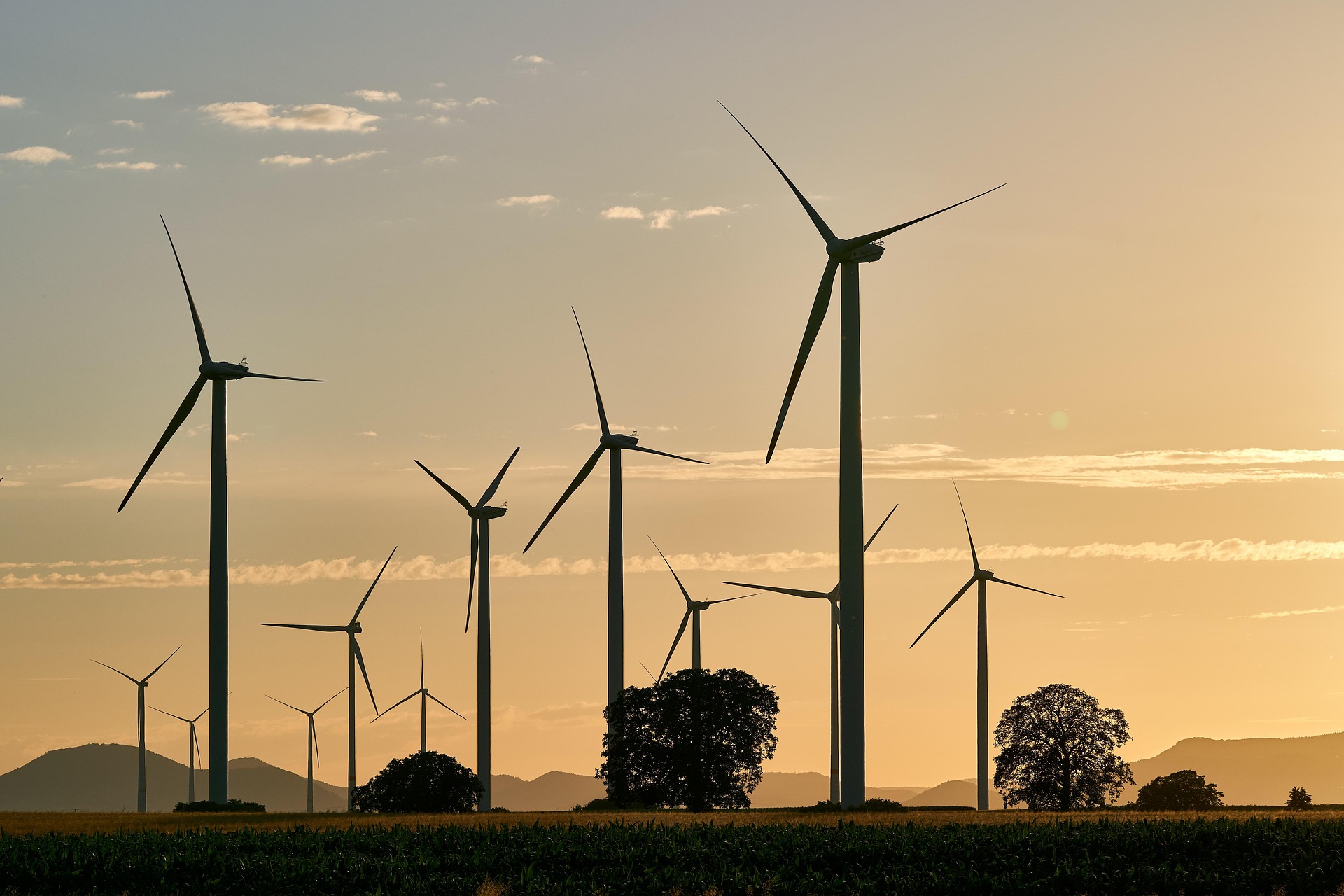
How Wind Energy Works
Wind is simply air moving from one place to another. Air moves because the sun heats different parts of the Earth’s surface unevenly. Warmer air rises, cooler air rushes in to replace it — and that movement is what we experience as wind. Wind energy captures that movement and converts it into electricity.
Think of a wind turbine as a fan working backwards. Instead of using electricity to spin blades and make wind, a wind turbine uses wind to spin blades and make electricity.
How a Wind Turbine Works: Step by Step
Step 1: Wind blows across the turbine’s blades. The blades are shaped like aeroplane wings — one side is curved, which creates a pressure difference that pulls the blade forward and causes it to rotate.
Step 2: The spinning blades turn a shaft inside the turbine tower.
Step 3: The shaft connects to a gearbox that increases the speed of rotation.
Step 4: The faster-spinning shaft drives a generator, which produces electricity.
Step 5: The electricity travels down the tower through cables and into the power grid.
Onshore vs Offshore Wind
Onshore wind farms — built on land, usually in open, windy areas like plains, hills, or coastlines. They are cheaper to build and maintain. South Africa has significant onshore wind potential, particularly along the Western and Eastern Cape coasts.
Offshore wind farms — built in the ocean, where winds blow stronger and more consistently than on land. They produce more electricity per turbine but cost significantly more to build and maintain.
Wind turbines have grown dramatically in size over the decades. Early turbines were barely taller than a house. Modern turbines in offshore wind farms stand over 200 metres tall — taller than the Eiffel Tower — with blades stretching more than 100 metres long. That enormous size is what allows them to capture enough wind to power thousands of homes from a single turbine.
Did you know: Wind energy is the second-largest source of renewable electricity in the world after hydropower, and it is the fastest-growing major energy source after solar. Global wind capacity has more than tripled in the last decade.
How Hydropower Works
Hydropower — electricity generated from water — is the oldest and still the largest source of renewable energy in the world. Humans have used water to do work for thousands of years, from ancient water wheels that ground grain to the massive dam systems that power entire countries today.
The basic principle is simple: water that is high up has stored energy in it, just like a ball at the top of a hill. When the water flows downhill, that stored energy converts into movement — and movement can drive a generator.
Read: Best Tools to Clean Solar Panels: Safe and Affordable Options for African Buyers
How a Hydroelectric Dam Works: Step by Step
Step 1: A dam is built across a river, creating a large reservoir of water behind it. The height of the water above the dam’s outlet gives the system its energy potential.
Step 2: When electricity is needed, gates at the base of the dam open.
Step 3: Water rushes through large pipes called penstocks at enormous speed and pressure.
Step 4: The rushing water spins turbines at the end of the penstocks.
Step 5: The spinning turbines drive generators, which produce electricity.
Step 6: The water exits below the dam and continues downstream.
Other Types of Hydropower
Pumped storage hydropower — this is the world’s largest form of energy storage. When there is more electricity being produced than needed (for example, from solar panels on a very sunny day), the surplus power is used to pump water uphill into a high reservoir. When electricity demand rises again, the water is released back downhill through turbines to generate electricity on demand. It works like a giant rechargeable battery using water and gravity.
Run-of-river hydropower — instead of a large dam, these systems divert a portion of a river through turbines and return it to the riverbed downstream. They generate less electricity but cause far less environmental disruption than large dams.
Africa has enormous untapped hydropower potential. Large dam projects on the Congo River, the Zambezi River, and other major rivers could supply electricity to a significant portion of the continent — though they also come with significant environmental and social considerations that must be managed carefully.
How Geothermal Energy Works
Beneath your feet, the Earth is incredibly hot. At the centre of our planet, temperatures reach over 5,000 degrees Celsius — as hot as the surface of the sun. This heat gradually works its way outward through the Earth’s layers. In some places, it comes very close to the surface, heating underground water and rock to very high temperatures.
Geothermal energy taps into that underground heat and uses it to generate electricity or warm buildings. The word geothermal comes from two Greek words: geo meaning Earth, and therme meaning heat.
How a Geothermal Power Plant Works: Step by Step
Step 1: Engineers drill deep wells into areas where underground rock or water is extremely hot — often near volcanic regions or geological fault lines.
Step 2: Steam or very hot water naturally rises up through these wells due to pressure.
Step 3: The steam drives turbines at the surface.
Step 4: The turbines spin generators, producing electricity.
Step 5: Cooled water is pumped back underground to be reheated, making the system self-sustaining.
Geothermal Heat Pumps for Homes
Even in places without volcanic activity, the ground just a few metres below the surface stays at a fairly constant temperature year-round — roughly 10 to 15 degrees Celsius in most regions. Geothermal heat pumps use this stable underground temperature for heating in winter and cooling in summer, working like a refrigerator in reverse. They do not generate electricity, but they use far less electricity than conventional air conditioners or heaters.
Geothermal energy has a major advantage over solar and wind: it works 24 hours a day, 7 days a week, regardless of weather. A geothermal power plant produces a steady, reliable stream of electricity that does not vary with clouds or wind. Kenya is one of Africa’s leaders in geothermal energy, with the Olkaria geothermal complex in the Rift Valley supplying a significant share of the country’s electricity.
How Biomass Energy Works
Biomass energy comes from organic materials — things that were once alive. This includes wood, agricultural waste like sugar cane husks or corn stalks, food waste, animal manure, and even municipal solid waste (ordinary rubbish). In many parts of Africa, biomass in the form of firewood and charcoal already provides most of a household’s cooking energy. Modern biomass energy goes further, converting these materials into electricity, heat, or liquid fuels.
How Biomass Generates Electricity
Direct burning (combustion): Organic material is burned to produce heat. That heat boils water to create steam, which drives a turbine connected to a generator. This is the same process used in coal power plants, except the fuel is biological rather than fossil.
Gasification: Organic material is heated in a low-oxygen environment, causing it to break down into a combustible gas. That gas is then burned to drive turbines or engines to generate electricity.
Anaerobic digestion (biogas): Bacteria break down organic waste — food scraps, animal manure, sewage — in a sealed tank without oxygen. The process produces biogas (mainly methane), which can be burned for cooking, heating, or electricity generation. Small biogas digesters are increasingly common on farms and in rural communities across Africa.
Is Biomass Really Renewable?
This is a fair question. When biomass is burned, it releases carbon dioxide — the same greenhouse gas released by fossil fuels. However, the key difference is timing. The plants that became biomass absorbed carbon dioxide from the atmosphere as they grew. When that biomass is burned, it releases roughly the same amount of carbon back into the atmosphere. The cycle is roughly balanced over the short term, unlike coal which releases carbon that was stored underground for millions of years.
That said, biomass is not a perfect solution. Burning wood at large scale still releases air pollution. Cutting forests for biomass energy destroys ecosystems that would otherwise absorb carbon. Sustainable biomass — using genuine waste materials, crop residues, or fast-growing plants on non-agricultural land — is very different from clearing forests for fuel. The distinction matters enormously.
The Pros and Cons of Renewable Energy
Renewable energy is not a perfect solution — nothing is. But understanding the real advantages and the genuine challenges helps you form an accurate picture. Here is an honest look at both sides.
The Advantages
It does not run out. The sun will keep shining for another five billion years. Wind will keep blowing as long as the sun heats the Earth unevenly. Renewable energy sources are effectively inexhaustible on any human timescale.
It produces little to no greenhouse gases during operation. Solar panels, wind turbines, and hydropower plants generate electricity without burning anything and without releasing carbon dioxide. This is the central reason the world is transitioning to renewable energy — to slow down climate change.
The costs keep falling. The cost of solar electricity has dropped by over 90 percent since 2010. Wind energy costs have fallen by more than 70 percent. In many parts of the world, building a new solar or wind farm is now cheaper than running an existing coal plant. This trend is expected to continue.
It creates jobs. The renewable energy sector employs more than 16 million people worldwide and is growing faster than most other industries. Solar panel installation, wind turbine maintenance, battery manufacturing, and grid engineering are all growing career fields.
It reduces dependence on imported fuels. Countries that import oil, coal, or gas are vulnerable to price spikes and supply disruptions. Generating electricity from local sun, wind, or water gives countries energy security and price stability.
Health benefits. Burning fossil fuels creates air pollution that causes respiratory diseases, heart disease, and premature death for millions of people every year. Renewable energy produces no air pollution during operation, improving public health in communities where it replaces fossil fuel plants.
The Challenges
Intermittency. The sun does not shine at night. Wind does not always blow. Solar and wind energy are variable — they produce different amounts of electricity at different times. The solution is energy storage (batteries and pumped hydro) and smart electricity grids that can balance supply and demand across large areas. These solutions exist and are improving rapidly, but they add cost and complexity.
Upfront cost. Installing a solar system, a wind farm, or a hydropower plant requires significant investment upfront, even if the running costs are very low afterward. For households and governments with limited capital, this is a real barrier. Financing mechanisms, subsidies, and falling equipment costs are gradually making this less of an issue.
Land use. Large solar farms and wind farms require significant land area. Large hydropower dams flood valleys and displace communities. Careful planning, environmental assessment, and community engagement are essential to minimise these impacts.
Geography matters. Not every location has strong sun, consistent wind, flowing rivers, or geothermal resources. Countries need to match their renewable energy choices to their geographic strengths.
Grid infrastructure. Electricity grids were built for large, centralised power plants that produce a steady stream of electricity. Integrating many smaller, variable sources of renewable energy requires grid upgrades — better transmission lines, smarter control systems, and more storage. This is underway in most countries but takes time and investment.
The overall picture is clearly positive. The challenges are real but solvable — and the world’s engineers and policymakers are actively solving them. The transition to renewable energy is not a question of if but how fast.
The State of Renewable Energy in 2026
The pace of renewable energy growth in recent years has surprised even the most optimistic forecasters. Here is where things stand at the start of 2026.
Global Capacity and Growth
Total global renewable electricity capacity surpassed 4,500 gigawatts by the end of 2025 — enough to power the entire world several times over if it ran continuously. Solar energy alone added more new capacity in 2024 than all other energy sources combined. Wind capacity has tripled in the last decade. In many countries, renewable energy now provides the majority of electricity.
Costs Involved
The cost of generating electricity from solar panels is now cheaper than from coal or gas in most countries. A new solar project built today produces electricity at a lower cost per unit than almost any fossil fuel alternative. Wind electricity costs have followed a similar downward path. Battery storage costs — essential for managing intermittency — have also fallen dramatically, making 24-hour renewable power increasingly practical.
Africa’s Renewable Opportunity
Africa has some of the world’s greatest untapped renewable energy resources. The continent receives more sunlight than any other. It has vast wind corridors along its coasts and highlands. Major rivers provide hydropower potential. East Africa’s Rift Valley offers substantial geothermal resources.
Countries like Morocco, South Africa, Kenya, and Egypt are leading the way with large-scale renewable projects. Morocco’s Noor solar complex in the Sahara is one of the largest solar power stations in the world. South Africa’s Renewable Energy Independent Power Producer Procurement Programme (REIPPPP) has brought billions in investment and gigawatts of new solar and wind capacity online since 2011. Kenya generates over 90 percent of its electricity from renewable sources, primarily geothermal and hydropower.
The challenge for much of Africa is financing and grid infrastructure — getting the electricity from where it is generated to where it is needed. But the resource base is extraordinary.
The Future of Renewable Energy
Green hydrogen — produced by using renewable electricity to split water into hydrogen and oxygen — is emerging as a way to store renewable energy for long periods and use it in industries like steel, shipping, and aviation that are difficult to electrify directly. South Africa and Namibia are both positioning themselves as future green hydrogen exporters.
Floating solar panels — installed on reservoirs and lakes — allow electricity generation without using land and reduce water evaporation.
Battery technology continues to advance, with new chemistries promising cheaper, longer-lasting storage.
Offshore wind is expanding into deeper waters, thanks to floating turbine platforms. Renewable energy in 2026 is not a niche technology. It is the mainstream future of energy.
How to Get Started with Renewable Energy
Understanding how renewable energy works is the first step. The second step is taking action in your own life. Here is how to get started, regardless of whether you are a homeowner, a renter, a student, or a business owner.
If You Own Your Home
Explore rooftop solar. Get two or three quotes from registered installers and ask specifically about hybrid systems with battery storage. Many African countries offer tax incentives or financing options for solar installations.
Consider a solar geyser as a first step. Water heating is one of the largest energy expenses in most homes, and a solar geyser can replace it at relatively low cost.
Check your municipality’s net metering or feed-in tariff policy. In some cities, you can sell surplus solar electricity back to the grid, shortening the payback period on your investment.
If You Rent or Cannot Install Panels
Ask your landlord. Many landlords are open to solar installations when the economic case is explained — it increases property value and reduces tenant electricity costs.
Use a portable solar generator for smaller loads like phone charging, laptop power, and lighting.
Switch your electricity contract to a green energy tariff if your utility offers one. Some providers allow you to pay a small premium so that your electricity comes from certified renewable sources.
Best Practice
Reduce your energy use first. The most cost-effective unit of energy is the one you do not need. LED lighting, energy-efficient appliances, and good insulation reduce your consumption before you even think about generation.
Learn more. The International Renewable Energy Agency (IRENA), the International Energy Agency (IEA), and the U.S. Energy Information Administration (EIA) all publish free, accessible information about renewable energy developments worldwide.
Support policies that accelerate the transition. Renewable energy development depends on long-term policy frameworks — carbon pricing, clean energy standards, and grid investment. Knowing what your local government is doing (and asking them to do more) matters.
Talk about it. The more people understand how renewable energy works, the faster public support for the transition grows. Share what you have learned.
Frequently Asked Questions
Is renewable energy reliable enough to power a whole country?
Yes — and it already does in many places. Iceland runs on nearly 100 percent renewable energy (mostly geothermal and hydropower). Norway generates over 90 percent of its electricity from hydropower. Denmark regularly generates more wind electricity than it consumes. Costa Rica has run on over 99 percent renewable electricity for years at a time. The key is combining different renewable sources — solar, wind, hydro, geothermal — so that when one is low, others compensate. Battery storage and smart grids fill in the remaining gaps.
What is the difference between renewable energy and clean energy?
These terms are often used interchangeably but have slightly different meanings. Renewable energy specifically refers to sources that replenish naturally — solar, wind, water, geothermal, and biomass. Clean energy refers to sources that produce little or no greenhouse gas emissions during operation. These overlap significantly, but not completely. Nuclear energy, for example, is often called clean energy because it produces no carbon emissions during operation — but it is not renewable because uranium, its fuel, is a finite resource. Sustainable biomass can be renewable but is not always clean if it causes air pollution.
Do solar panels work on cloudy days?
Yes, though at reduced output. Solar panels generate electricity from light, not direct sunlight specifically. On an overcast day, panels typically produce 10 to 25 percent of their clear-sky output. Diffuse light still works — it is just weaker than direct sunshine. This is why battery storage is important: panels generate more than needed on sunny days and store the surplus for cloudy days or nights.
How long do solar panels, wind turbines, and batteries last?
Solar panels from reputable manufacturers are typically warranted for 25 years and often last 30 or more. Their efficiency declines slowly — about 0.5 percent per year — so a 25-year-old panel is still producing around 87 percent of its original output. Wind turbines are designed for 20 to 25 years of operation. Lithium iron phosphate (LiFePO4) batteries last 10 to 15 years, rated for thousands of charge cycles. Lead-acid batteries last 3 to 5 years.
Does making renewable energy equipment cause pollution?
Yes, manufacturing solar panels, wind turbines, and batteries requires energy and materials — and some of that manufacturing currently uses fossil fuels and generates emissions. However, the emissions produced during manufacturing are repaid very quickly. A solar panel generates enough clean energy to offset its manufacturing emissions within 1 to 4 years, depending on the panel type and location. After that, it generates truly clean energy for 20 or more additional years. As manufacturing increasingly shifts to renewable-powered facilities, even this manufacturing footprint will shrink.
What is the biggest renewable energy source in the world right now?
Hydropower is currently the largest single source of renewable electricity globally, providing about 15 percent of total world electricity generation. However, solar is the fastest-growing energy source in the world and is expected to overtake hydropower in total capacity within the next few years. Wind is the second fastest-growing source and is second only to hydro in total renewable electricity generation in most regions.
Can renewable energy replace fossil fuels completely?
The scientific consensus is yes — renewable energy can fully replace fossil fuels in electricity generation, and largely replace them in heating, transportation, and industry through electrification. This is called deep decarbonisation. The challenges are not technical — they are economic, political, and logistical. Replacing existing infrastructure, financing new systems in lower-income countries, and managing the transition for communities that depend on fossil fuel industries are the main hurdles. Most energy researchers believe a fully renewable-powered global economy is achievable by 2050, with the right policies and investment.
Read: Solar Energy in Africa 2026: Recording Significant Growth
Is renewable energy more expensive than fossil fuels?
For new electricity generation, renewable energy is now cheaper than fossil fuels in most of the world. A new solar farm or wind farm built today produces electricity at a lower cost per kilowatt-hour than a new coal or gas plant in most countries. Where renewable energy can still be more expensive is in providing firm, 24-hour power — because of the added cost of storage or backup generation. But this gap is closing rapidly as battery costs continue to fall.
References and Further Reading
This article draws on publicly available data and reports from the following authoritative sources. All are freely accessible online for readers who want to explore further.
[1] International Renewable Energy Agency (IRENA) — Renewable Power Generation Costs 2024. irena.org. IRENA publishes annual reports on the cost of renewable electricity by technology and region, widely regarded as the most authoritative source on global renewable energy economics.
[2] International Energy Agency (IEA) — World Energy Outlook 2025. iea.org. The IEA’s flagship annual publication provides comprehensive data and projections for global energy markets, including renewable energy capacity additions and forecasts.
[3] U.S. Energy Information Administration (EIA) — Renewable Energy Explained. eia.gov. The EIA provides clear, factual explanations of how each type of renewable energy works, along with current U.S. and global energy data.
[4] United Nations — Climate Action: Renewable Energy. un.org. The UN’s clean energy resources include accessible explanations of renewable energy types and their role in addressing climate change.
[5] National Geographic — Hydropower Explained. education.nationalgeographic.org. National Geographic’s education platform provides accessible explanations of hydropower and other energy topics, with strong visual resources.
[6] National Grid — How Does Solar Power Work? nationalgrid.com. National Grid (UK) publishes clear technical explanations of solar PV, wind, and other renewable technologies aimed at general audiences.
[7] South African Renewable Energy Independent Power Producer Procurement Programme (REIPPPP) — Programme Overview. ipp-renewables.co.za. The South African government’s REIPPPP programme data provides insight into Africa’s renewable energy development and investment landscape.
[8] Africa Renewable Energy Initiative (AREI) — Continental Status Report. arei-irae.org. AREI tracks renewable energy development across the African continent and provides country-by-country data on installed capacity and projects.
[9] BloombergNEF — New Energy Outlook 2025. bnef.com. BloombergNEF’s annual energy transition research provides detailed analysis of cost trends, technology development, and market projections for renewable energy globally.
[10] Our World in Data — Energy. ourworldindata.org/energy. Our World in Data compiles and visualises global energy data from authoritative sources, with clear charts and accessible explanations suitable for all reading levels.
Note: All data in this article reflects information available as of January 2026. Renewable energy is a rapidly developing field — figures for installed capacity, costs, and country-level progress change frequently. Readers are encouraged to check the sources above for the most current numbers.
Conclusion
I hope I have help to enlighten those who may be wondering about what renewable energy mean and how it works.
The article “how renewable energy works” is a good beginning point especially for high school juniors who are interested in clean energy and how to solve the climate change question.
Renewable energy is one of the most important stories of our time. In less than fifteen years, solar and wind power have gone from expensive niche technologies to the cheapest sources of new electricity on the planet. The shift happening right now — from fossil fuels to clean energy — is the largest transformation of the global energy system in history.
Understanding how renewable energy works gives you the tools to make sense of this change as it happens around you: to evaluate news stories about new projects, to ask better questions when talking to a solar installer, to understand what your government’s energy policies actually mean, and to make informed decisions about your own energy use.
The sun, wind, water, and Earth’s heat are not new discoveries. Human beings have been using them for thousands of years. What is new is how effectively we can now capture and use them. Renewable energy is not the energy of the future. In most of the world, it is already the energy of today.
You now understand how renewable energy works. That makes you part of the solution, not just a passenger watching the change happen.
Related reading
Best Solar Systems for Load Shedding in South Africa
Solar Panel Maintenance Tips
Why Solar Panels Lose Efficiency (And How to Fix It)
Use the Free Solar Cost Calculator to Estimate how much you need to Install solar Power in your home and country
Solar Power Cost Calculator
Accurate 2026 estimates for 20 African countries — panels, batteries, inverter & ROI
Data verified April 2026Solar System Estimate
SolarToAfrica — Estimates based on verified 2026 market data (CBN, EPRA Kenya, Eskom SA, Ember Africa, NERC Nigeria). Always obtain at least 3 installer quotes. Updated April 2026.