


Off-Grid Solar Solutions in Uganda: A Complete Guide
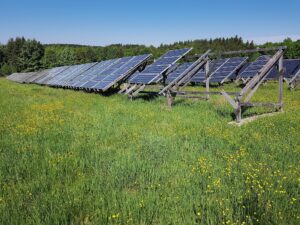
Today’s article is going to look at “Off-Grid Solar Solutions in Uganda: A Complete Guide (2026)”
In many rural areas and districts in Uganda, the stories are repleted with the struggles of lack of electricity to power basic necessities like light bulbs and fans, not mention fridge and other home appliances that make life worth living.
In some districts especially Yumbe in northern Uganda, health facilities was without electricity for most part of 2023 despite the huge budgetary allocation for power— That year alone up to UGX 1 billion was allocated but the grid never delivered.
This however is the norm as Uganda’s electricity access rate is around 58 percent nationally, but rural electrification at many districts and region sits at roughly 18 to 20 percent. Outside the cities, where 70 percent of Ugandans live, electricity is a luxury which many can only dream about. Most people wake up and go to sleep without reliable power.
Read: How is Solar Penetration in Uganda Today (2026) Update
Waiting for the national grid seems to be unrealistic in both the short and long term. Extending the grid to sparsely populated rural areas costs more than it generates. The economics simply do not work. What does work — and is working, right now, across Uganda — is off-grid solar. This guide explains how off-grid solar solutions in Uganda works in 2026, what it costs, which type suits your situation, and how to avoid the mistakes that waste money.
For the 80 percent of Uganda’s rural population without reliable electricity, off-grid solar is not a compromise. It is the fastest, most practical path to power.
What Is Off-Grid Solar and Why Does It Work in Uganda?
An off-grid solar system generates and stores electricity completely independently from the national grid.
It uses solar panels to generate energy during the day, which is stored in batteries, and is used at night time when there are no sunlight to power home appliances.
Uganda’s geography makes off-grid solar particularly effective. The country sits near the equator and receives between 5.1 and 5.5 kilowatt-hours of solar energy per square metre daily — consistent, intense sunshine across every region, every month of the year. A solar panel installed in Gulu, Mbarara, Mbale, or Moroto will produce electricity that would power any home through every season.
The alternative is expensive. A family dependent on kerosene, candles, and a generator often spends more monthly than a solar loan repayment would cost. The arithmetic almost always favours solar.
Uganda’s National Energy Policy 2023 explicitly prioritises off-grid solar, mini-grids, and standalone home systems as the primary path to rural electrification independence as grid power may never get to many remote communities.
Read: Best Solar Companies in Uganda (2026 List)
The Three Types of Off-Grid Solar Solutions in Uganda
- Solar Home Systems
A solar home system is a self-contained unit for a single household. Panels on the roof or nearby, a battery indoors, and an inverter that powers your lights, phone chargers, radio, TV, and small appliances. Adoption has grown rapidly — rural solar home system usage rose from 18 percent in 2017 to 38 percent by 2020, one of the fastest rates in East Africa.
Solar home systems range from very small single panel, battery, and two or three LED lights — to full household setups that run a fridge, fans, and provides lighting for multiple rooms through the night. The right size depends entirely on what you need to power and for how long.
Pay-As-You-Go models have made solar home systems accessible to households that cannot afford upfront payments. Companies like ENGIE Energy Access, M-KOPA, and BBOXX operate PAYG across Uganda — small mobile money payments eventually transfer full ownership to the household.
Read: Solar Panel Maintenance Tips for Long-Lasting Performance in Africa
- Solar Mini-Grids
A solar mini-grid is a community-scale electricity system. Rather than each household running its own panels and batteries, a central solar installation generates electricity and distributes it to multiple homes, shops, schools, and health centres through a local distribution network — essentially a small-scale version of the national grid, but powered by the sun and disconnected from it.
As of 2020, Uganda had 34 commissioned mini-grids. They are best suited to clustered settlements where shared infrastructure is economical. For dispersed communities, individual solar home systems are usually more cost-effective.
The challenge is regulatory and financial: slow licensing, tariff controls, and lower-than-expected demand. Successful mini-grids share one quality — they are sized for productive use. Communities where electricity powers businesses, mills, and cold storage generate enough demand to be sustainable.
Standalone Systems for Businesses and Farms
These are purpose-designed systems for specific commercial or agricultural loads: solar borehole pumps, refrigeration for clinics, full power for schools and lodges far from the grid.
Standalone systems are the fastest-growing segment in 2026. A business spending UGX 300,000 monthly on generator fuel can recover a solar investment within three to four years, then operate at near-zero energy cost for 20 more years.
What Off-Grid Solar Costs in Uganda in 2026
Prices will depend on the system size you want, type of battery and the installer you engaged. These ranges reflect complete installed systems with lithium batteries — the correct choice for new installations in 2026.
You can glean the different sizes, the price range, and want they can power below:
Basic Solar Home System — up to 1.5 kW
Price range: UGX 1.5 million to UGX 3 million
Can power: 3 to 5 LED lights, phone and laptop charging, Wi-Fi router, small radio or TV
PAYG options available from UGX 50,000 deposit. Entry-level kits with lead-acid batteries start lower but require replacement in 2 to 3 years.
Standard Home System — 2 kW to 3 kW
Price range: UGX 4.5 million to UGX 6.5 million
Can Power: Full lighting, medium fridge, fans, TV and decoder, device charging through the night
The most popular choice for households moving beyond basic lighting. Lithium battery lasts 10 to 15 years.
Large Home or Small Business — 5 kW
Price range: UGX 8 million to UGX 11.8 million
Can power: Whole house or small office: fridge, freezer, water pump, computers, air conditioning during daytime
Suitable for productive use — businesses that generate income from the system recover costs within 3 to 5 years.
Commercial or Farm System — 8 kW to 15 kW+
Price range: UGX 15 million to UGX 35 million+
Can powers: Cold storage, borehole pump, processing equipment, multiple office loads
The Honest Challenges — What Can Go Wrong
Off-grid solar works. When it fails, the reasons are almost always predictable and preventable. The clear reasons are given below:
Low-quality products flooding the market: Uganda’s off-grid solar market has a significant counterfeit problem. Panels, batteries, and charge controllers with fraudulent performance labels are sold widely, particularly in rural markets. A battery rated for 100Ah that actually holds 50Ah looks identical to the real thing until it runs flat in half the expected time. Always buy from ERA-registered companies with named brand components.
Systems sized for yesterday, not tomorrow: the most common complaint from solar home system owners is running out of power. Systems are often sized for the buyer’s current load without any planning for growth. A family that adds a fridge or a second room a year later is suddenly on a system that cannot cover their needs. Size with 20 to 30 percent headroom.
Lead-acid batteries in a hot climate: many entry-level systems use lead-acid batteries, which are cheaper upfront but degrade rapidly under Uganda’s heat and daily cycling. A lead-acid battery in a rural Ugandan home often lasts 18 to 30 months. A lithium battery lasts 10 to 15 years. This matters enormously for total cost of ownership.
No maintenance plan: panels accumulate dust. Connections corrode. Batteries need monitoring. Many buyers install a system and never look at it again until something fails. Build a simple maintenance routine — monthly panel cleaning, quarterly connection checks, an annual professional inspection — into your plan from day one.
Read: Cost Of Solar Systems in Uganda (2026) Guide
Frequently Asked Questions
What is the difference between off-grid solar and a grid-tied system?
An off-grid solar system operates completely independently of the national electricity grid. It has no connection to UEDCL and functions whether the grid is on or off. A grid-tied system is connected to the national grid and can sell surplus electricity back to it — but it requires grid power to operate and shuts off during outages. For the majority of rural Uganda, off-grid is the only practical option. For urban homeowners who want backup during outages while staying connected to the grid, a hybrid system is the right choice.
How long does an off-grid solar system last in Uganda?
Quality solar panels from Tier 1 manufacturers carry 25-year output warranties and typically last 30 years. Lithium iron phosphate batteries last 10 to 15 years under Uganda’s daily cycling. Inverters from established brands last 5 to 10 years. The overall system, with one battery replacement, can serve a home or business for 25 to 30 years. Lead-acid batteries are the exception — in Uganda’s climate, they typically last 2 to 3 years before needing replacement.
Can off-grid solar power a whole house in Uganda?
Yes. A 5 kW off-grid system with a 200Ah lithium battery covers a typical 3 to 4 bedroom home — lights, fridge, fans, TV, Wi-Fi, and device charging through the night. Larger homes with air conditioning or electric water heating need bigger systems. Any reputable installer performs a load assessment before quoting. Never accept a quote without this step.
Is PAYG solar worth it in Uganda?
For households that cannot afford upfront payment, PAYG is genuinely valuable — it brings reliable solar power within reach immediately. The total cost is higher than a cash purchase, which is the honest trade-off. If you can buy outright, do. If you cannot, PAYG through ENGIE Energy Access, M-KOPA, or BBOXX beats kerosene or candles every time.
What are solar mini-grids and who are they for?
A solar mini-grid is a small community power network — a central solar installation and battery bank that distributes electricity to multiple homes and businesses through local wiring. They are most effective in clustered rural settlements where households are close enough together to share infrastructure economically. Uganda had 34 commissioned mini-grids as of 2020. They are best suited to communities with productive electricity uses — mills, shops, clinics — that generate enough demand to sustain the system financially.
How do I avoid buying fake or low-quality solar products in Uganda?
Buy from ERA-registered solar companies that can provide the brand name and model number of every component. Ask for the manufacturer’s data sheet for any panel, battery, or inverter before purchasing. Avoid market stalls and informal dealers selling unbranded equipment. If the price is dramatically lower than quotes from registered companies, the components are almost certainly substandard. The counterfeit solar market in Uganda is large enough to be a serious risk — protecting yourself requires choosing your supplier carefully, not just your product.
Does the Ugandan government support off-grid solar?
Yes. Uganda’s National Energy Policy 2023 explicitly prioritises off-grid solar and mini-grids as the primary path to rural electrification. The Rural Electrification Agency funds both private and public sector projects. The Uganda Energy Credit Capitalisation Company has promoted off-grid financing. The Electricity Access Scale-Up Project, launched recently, specifically targets off-grid solar technologies. International partners including GIZ, the World Bank, and the European Investment Bank also fund rural electrification projects across the country.
Conclusion
Off-grid solar solutions in Uganda is not a temporary fix until the national grid arrives. For most of rural Uganda, it is the permanent solution — faster to deploy, cheaper to maintain, and more reliable than waiting decades for grid extension that may never come.
The technology works. Uganda’s sunshine is among the best in the world for solar generation. Financing models — from PAYG to bank loans to NGO grants — have made entry-level systems accessible at nearly every income level.
What remains is the decision. The sun rises over Uganda every morning without fail. Off-grid solar is how you use it.
Related reading
Best Solar Companies in Uganda (2026) | Cost of Solar Systems in Uganda (2026) | How Is Solar Penetration in Uganda Today?
Sources
IEA Uganda Energy Transition Plan; Uganda National Energy Policy 2023; Rural Electrification Agency; GIZ Pro Mini Grids
Programme; JEPA Africa; African Centre for Media Excellence. Data reflects January 2026.
Get Estimates of Solar Power Cost with our Free SOLAR POWER COST CALCULATOR below
Solar Power Cost Calculator
Accurate 2026 estimates for 20 African countries — panels, batteries, inverter & ROI
Data verified April 2026Solar System Estimate
SolarToAfrica — Estimates based on verified 2026 market data (CBN, EPRA Kenya, Eskom SA, Ember Africa, NERC Nigeria). Always obtain at least 3 installer quotes. Updated April 2026.
Download our,
And