



Why Solar Panels Lose Efficiency (And How to Fix It Fast)
You invested in solar power to stop depending on an unreliable grid. So when your panels start producing less energy than they used to, it is frustrating — and confusing. Is something broken? Do you need new equipment? Is it even worth fixing?
The good news: in most cases, your panels are fine. Solar panels rarely fail outright. What they do is quietly lose efficiency over time — or suddenly underperform because of something simple that most people overlook. Therefore, this guide “why solar panels lose efficiency” explains the six most common reasons why solar panels lose efficiency, how to identify which one is affecting your system, and exactly what to do about each one. No technical background needed.
Read:Best Tools to Clean Solar Panels: Safe and Affordable Options for African Buyers
A solar panel that is not cleaned or maintained can lose up to 30% of its output. That is free energy going to waste every single day.
What Does Solar Panel Efficiency Actually Mean?
When a solar panel is described as “20% efficient,” it means the panel converts 20% of the sunlight that hits it into usable electricity. The rest is lost as heat or reflected away.
Efficiency matters because it determines how much power you get per square metre of panel space. A panel rated at 400W should produce close to 400W under ideal conditions — direct midday sun, correct angle, clean surface, and moderate temperature.
The problem is that real-world conditions are never ideal. And in much of Africa, several factors work against your panels at the same time. Understanding them is the first step to fixing them.
- Dust and Dirt Buildup — The Biggest Cause of Power Loss
If you live in West Africa, the Sahel, the East African highlands, or any semi-arid region, dust is your solar system’s biggest enemy. During the harmattan in West Africa, the dry northeast winds carry fine Saharan dust across the entire sub-region for months. In East Africa, red laterite dust settles on everything in the dry season. Even in cities, pollution, soot, and dust from construction and traffic accumulate on panel surfaces.
Here is why it matters so much: a thin, even layer of dust that you can barely see can reduce panel output by 10 to 15 percent. A heavier buildup — common after a dry season or a dust storm — can cut output by 25 to 30 percent. If your system has been running for a few months without cleaning, this alone could explain most of the performance drop you have noticed.
The mechanism is straightforward. Solar panels produce electricity by absorbing photons from sunlight. When dust sits on the surface, it blocks those photons before they reach the solar cells. Your panels receive less light, so they produce less power. It is that simple.
Read: Solar Panel Maintenance Tips for Long-Lasting Performance in Africa
How to Fix It
Clean your panels every two to four weeks in dusty regions, or after every significant dust storm or harmattan episode.
Use plain water and a soft cloth or sponge. Avoid abrasive materials — scratches on the glass permanently reduce transparency.
Clean early in the morning before the panels heat up. Water on hot glass can cause micro-cracks over time.
Do not use soap unless the panels are heavily soiled. If you do use it, rinse thoroughly. Soap residue creates a film that attracts more dust.
For rooftop panels, use a long-handled soft brush and a garden hose if safe access is possible. If not, hire someone — the energy gain from a clean panel pays for a cleaning far faster than you might think.
Tip: Quick test: Run your finger across the panel surface. If it leaves a clean line in the dust, your panels need cleaning today.
- Heat — The Invisible Efficiency Thief
This one surprises most people. Solar panels need sunlight — but they do not like heat. The two come together in Africa, and the result is a phenomenon that quietly reduces your system’s output every hot afternoon.
Read: How to Clean Dust from Solar Panels in Nigeria and Africa, Step-by-Step Guide
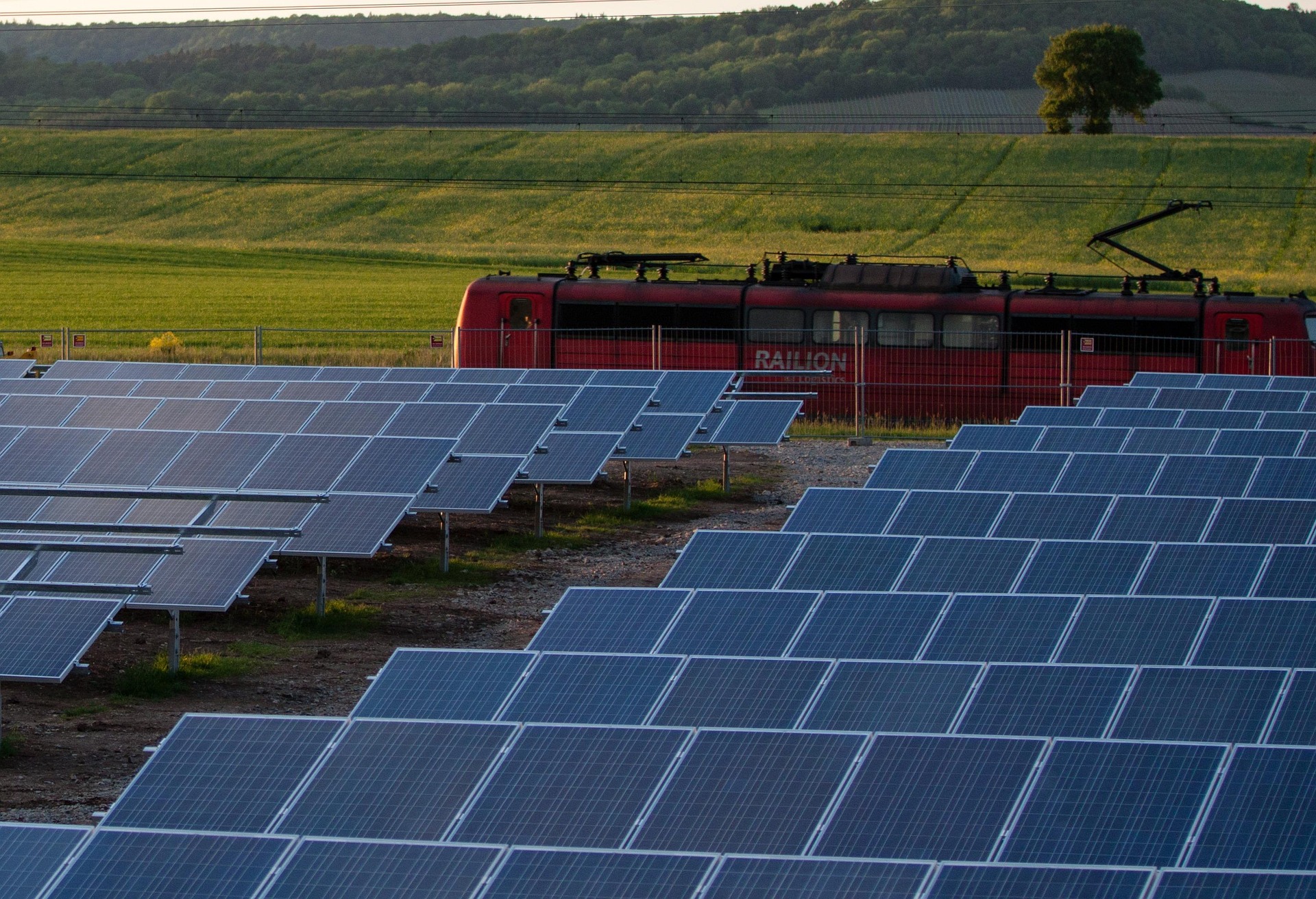
Solar panels are tested and rated at 25 degrees Celsius. For every degree above that temperature, most panels lose about 0.3 to 0.5 percent of their output. On a typical afternoon in Lagos, Accra, Nairobi, or Lusaka, panel surface temperatures can reach 60 to 70 degrees Celsius. That is 35 to 45 degrees above the test temperature — meaning a potential output reduction of 10 to 20 percent just from heat alone, even under full, direct sunlight.
This is why your battery might charge quickly in the morning but slow down by midday, even though the sun is stronger. The panels are hotter, and heat is cutting into their output.
How to Fix It
Ensure proper airflow beneath the panels. Panels mounted flat against a roof with no gap underneath cannot shed heat. A gap of at least 10 to 15 centimetres allows air to circulate and keeps temperatures lower.
Tilt your panels correctly. The right tilt angle (roughly equal to your latitude, facing true south in the northern hemisphere and true north in the southern hemisphere) improves airflow and maximises morning and late-afternoon output, when temperatures are cooler.
Consider panel colour and surroundings. Dark roofs and surfaces around panels radiate more heat. Light-coloured surfaces or reflective roofing materials under and around panels help.
Check your panel’s temperature coefficient in the datasheet. A coefficient of -0.30%/°C is better than -0.50%/°C in hot climates. When buying new panels, prioritise a lower temperature coefficient.
Tip: Morning and early evening are when heat-affected panels recover. If your system charges fast early and slows by noon, heat is likely the cause — not a fault.
- Wrong Installation Angle or Direction
A solar panel installed at the wrong angle or facing the wrong direction can lose a significant portion of its potential output every single day — permanently, until it is corrected. This is one of the most common mistakes made during quick or informal installations, and it is completely fixable.
Solar panels produce maximum power when sunlight hits them at a 90-degree angle — that is, the sun is shining directly onto the face of the panel. When the angle is off, the effective surface area exposed to direct sunlight shrinks. A panel facing 30 degrees away from the optimal direction can lose 10 to 15 percent of annual output. One facing the wrong direction entirely — a common mistake in informal installations — can lose 30 percent or more.
The Correct Orientation for African Countries
North of the equator (Nigeria, Ghana, Senegal, Ethiopia, Kenya north of the equator): Face panels true south.
South of the equator (South Africa, Zimbabwe, Zambia, Mozambique, southern Tanzania): Face panels true north.
Near the equator (Uganda, Rwanda, coastal Kenya, southern Cameroon): East-west orientation or flat mounting works adequately due to the high solar angle.
Tilt angle: Set the tilt to approximately your latitude in degrees. In Lagos (6°N), a 6-degree tilt is fine. In Johannesburg (26°S), aim for around 26 degrees.
How to Fix It
If your panels are fixed-mounted and facing the wrong direction, correction requires remounting — a one-time job that pays for itself quickly. If your panels are on adjustable mounts, experiment with the angle over several weeks and monitor your charge controller output to find the sweet spot for your specific location and season.
- Shading — Even a Small Shadow Causes a Big Problem
Shading is one of the most misunderstood issues in solar performance. Most people assume that a small shadow covering 5 percent of a panel reduces output by 5 percent. The reality is far worse.
Solar panels are made up of individual cells connected in series. When one cell is shaded, it acts like a partial blockage in a pipe — it restricts the entire flow. A shadow covering just one cell in a panel can reduce that panel’s output by 50 percent or more. If your panels are wired in a series string (common in many installations), shading one panel can drag down the output of the entire string.
Common shading sources in African settings include tree branches that have grown since installation, new buildings or structures built nearby, water tanks placed on rooftops, satellite dishes, and even bird droppings sitting on a small area of the panel.
How to Fix It
Identify the source. Observe your panels at different times of day — morning, midday, and afternoon — to see when shadows appear and where they come from.
Trim trees and branches that have grown to shade panels since installation. This is the most common fix and often the most impactful.
Reposition panels if a new structure now shades them. Even moving panels a metre or two can sometimes eliminate the problem.
Install microinverters or power optimisers if shading is unavoidable. These devices allow each panel to operate independently, so one shaded panel no longer drags down the rest.
Clean bird droppings immediately. Unlike dust, droppings are concentrated on one spot and cause disproportionate losses. They also etch the glass if left too long.
Tip: If your output is significantly lower in the morning but recovers by midday, or vice versa, a time-specific shadow is likely the cause. Watch your panels throughout the day.
- Ageing and Natural Degradation
All solar panels degrade over time. This is normal, expected, and accounted for in quality products — but it is worth understanding so you can tell the difference between natural ageing and a fixable problem.
Most quality panels degrade at a rate of 0.5 to 0.8 percent per year. This means a panel rated at 400W when new will produce around 380W after ten years. That is a real but manageable reduction. Budget panels from unknown manufacturers often degrade faster — sometimes 1.5 to 2 percent per year.
A more dramatic form of degradation is called potential-induced degradation (PID), which can happen when panels are exposed to high voltage, high humidity, and heat simultaneously — conditions common in tropical coastal areas. PID can cause panels to lose 30 percent or more of their output in just a few years. Good-quality panels from reputable brands are PID-resistant; cheap panels often are not.
How to Fix It
Buy from reputable brands with a documented linear power warranty — usually 25 years guaranteeing no more than 0.5%/year degradation.
Record your system’s baseline output when newly installed. Compare monthly. A sharp drop that does not correspond to cleaning, shading, or heat is a sign of accelerated degradation.
For PID-affected panels, a process called PID recovery — applying a reverse voltage overnight — can restore some lost output. This is done by a solar technician.
- Inverter and Battery Problems
Sometimes the panels are perfectly fine — and the problem is somewhere else in the system. The inverter and battery are the two most common culprits when panels appear to underperform but cleaning and inspection reveal nothing wrong.
Read: Best Solar Inverters for Africa: Complete Buying Guide (2026)
Inverter Issues
Your inverter converts the DC electricity your panels produce into AC electricity that your appliances use. If the inverter is ageing, overheating, or starting to fail, it converts that electricity less efficiently — or cuts out entirely during peak load.
Check the inverter display or app for error codes. Most modern inverters flag specific problems.
Ensure the inverter is in a shaded, ventilated space. Inverters in direct sun or enclosed, hot spaces overheat and throttle output to protect themselves.
Check for loose DC connections between the panels and the inverter. A loose connection causes resistance, which wastes energy and can be a fire risk.
Read: Best Solar Batteries for Africa’s Hot Climate: A Complete Buying Guide (2026)
Battery Issues
A battery that can no longer hold a full charge will appear to fill up quickly and discharge quickly — making your whole system seem underpowered even if the panels are performing fine.
Check battery voltage with a multimeter when fully charged and under load. A significant drop under load indicates a weak cell.
Review your charging and discharging history. Regularly draining batteries below 20% shortens their lifespan significantly — especially for lead-acid batteries.
Look for physical signs: swelling, corrosion on terminals, or a sulphurous smell from lead-acid batteries all indicate serious battery deterioration.
For lithium batteries, use the manufacturer’s app or a battery management system (BMS) reader to check individual cell health.
How to Diagnose Your System in 10 Minutes
Before calling a technician, run through this quick check:
Step 1 — Clean the panels and wait 30 minutes. If output improves significantly, dust was the problem.
Step 2 — Check at different times of day. Good morning output but poor midday output points to heat. Poor morning output but fine midday output points to east-side shading.
Step 3 — Walk around your roof or installation. Look for new shadows, growth, or obstructions that were not there at installation.
Step 4 — Check your inverter. Look at the display for error messages. Note the input voltage from the panels and compare it to what your panels are rated for.
Step 5 — Check your batteries. If fully charged batteries drain in half the expected time, battery health is the issue.
Step 6 — Compare to your installation record. If you have your original output data, compare today’s readings. A sharp drop that nothing above explains warrants a professional inspection.
Frequently Asked Questions
How much output should I expect from my solar panels each day?
A rough calculation: multiply your total panel wattage by the number of peak sun hours in your location. Most of sub-Saharan Africa receives 4.5 to 6 peak sun hours daily. A 400W panel in a 5-peak-sun-hour location should produce around 2000Wh (2kWh) per day under clean, well-installed conditions. If you are getting significantly less, one of the causes in this guide is likely at work.
How often should I clean my solar panels in Africa?
Every two to four weeks in dusty or high-pollution environments. Monthly in cleaner, coastal, or wetter climates where rain does some of the cleaning. After every dust storm, harmattan event, or heavy construction period nearby — regardless of your regular schedule.
Can rain clean my solar panels?
Light rain helps remove loose dust and can maintain a panel that is already reasonably clean. It cannot remove heavy dust buildup, bird droppings, pollen, or soot from cooking fires — all common in African settings. Rain also often leaves water marks as it evaporates, which can themselves reduce output slightly. Do not rely on rain as your only cleaning method.
My panels are only two years old. Why are they already underperforming?
Two-year-old panels should still be performing close to their original rating — within 1 to 2 percent. If the drop is larger than that, it is almost certainly a fixable external cause: dust, shading, heat, or a problem with the inverter or batteries. True panel failure within two years is rare in reputable brands and should be covered under warranty.
Is it worth paying someone to maintain my solar system?
Yes, if your system is larger than 1kW or installed on a rooftop where access is difficult. A professional inspection twice a year — including cleaning, connection checks, inverter diagnostics, and battery health testing — typically costs far less than the energy losses from an unmaintained system. Think of it like servicing a car.
Do solar panels work better in cold weather?
Yes — and this is not just theory. Solar panels produce more electricity per unit of sunlight in cooler temperatures. A sunny, cool morning in the highlands of Kenya or the South African highveld can produce better output than a blazing hot afternoon at the same sun intensity. This is why altitude and season matter for solar performance in Africa.
Conclusion
Solar panels are remarkably low-maintenance compared to diesel generators — but they are not zero-maintenance. The difference between a well-maintained system and a neglected one can easily be 25 to 30 percent of your total energy output. In a country where grid power is unreliable, that gap matters every single day.
Therefore, this article “why solar panels lose efficiency” has effectively deal with a major problem solar owners face daily
The causes of efficiency loss are almost always simple: dust, heat, shade, angle, or a battery or inverter that needs attention. None of them require replacing your panels. Most can be fixed in an afternoon with tools you already have.
Start with the easiest fix first — clean your panels. Then work through the list. Chances are, you will recover more output than you expected before you get to the bottom.
Your panels are not broken. They probably just need attention. Give them that, and they will give you years of reliable, free power in return.
Related articles:
How to Clean Solar Panels Safely
Best Solar Generators for Africa 2026
How to Calculate Your Solar Power Needs —
Disclosure: This article may contain affiliate links. Purchases made through these links support our work at no extra cost to you.