

How Much Does a Full Solar Kit Cost in Kenya? (2026 Price Guide)
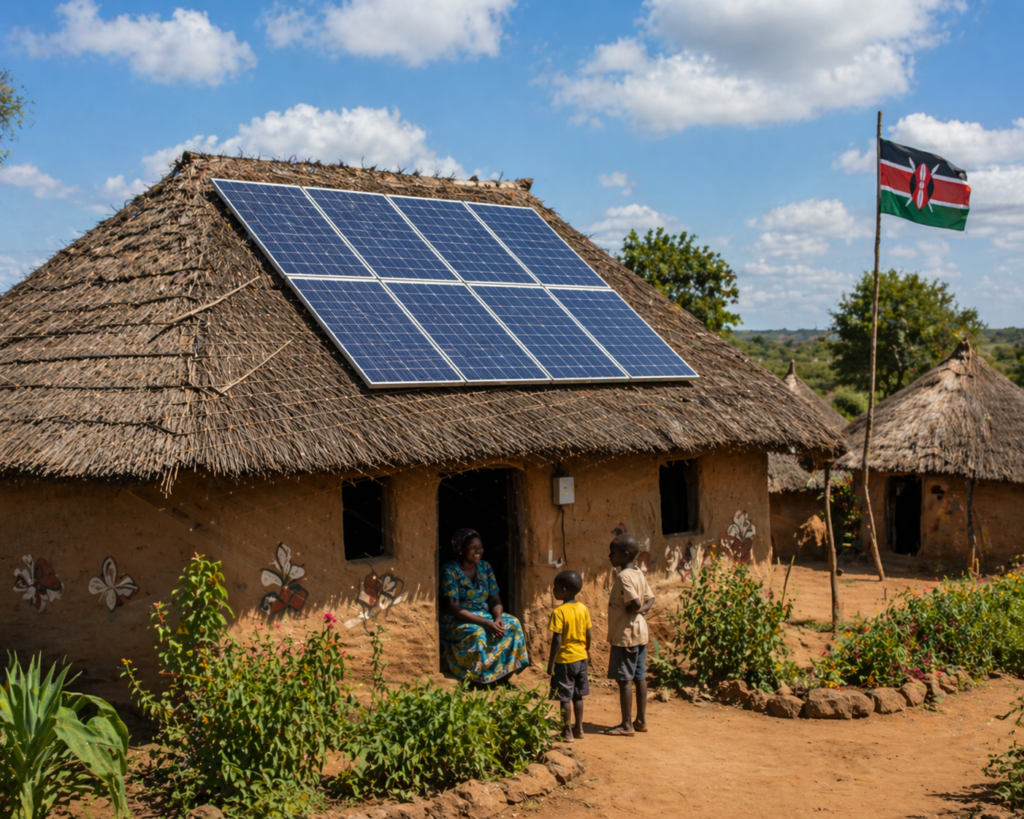
Installing a solar system can reduce electric cost drastically as shown in Kibagenge when Peter who was paying KSh 9,200 every month to Kenya Power, saw his bill reduce to only Ksh 650 after installing a 5 kW solar system. Similarly in Kandutura Village, a homeowner who undersized her battery at first says the same thing every solar owner in Kenya eventually says: she wishes she had done it sooner.
As KPLC tariffs climbed 45 percent since 2022, blackouts continue to rein supreme as more Kenyans keep to paying for KPLC inefficiency. More Kenyans are doing the economics of scale to determine the scale of preference between the continuous paying for darkness or installing a solar system for their home.
The question that stops most people in their track is still “how much does a full solar kit cost in Kenya in 2026?” This guide gives you real numbers, not vague estimates.
Going solar is not a luxury decision anymore as households are spending KSh 4,000 or more on KPLC every month.
Read: Cost Of Solar Systems in Uganda (2026) Guide
What a Full Solar Kit Actually Includes
The phrase ‘full solar kit’ is used loosely in Kenya, and this is where buyers get caught. A complete installation includes five things. If any one is missing, the quote is not comparable.
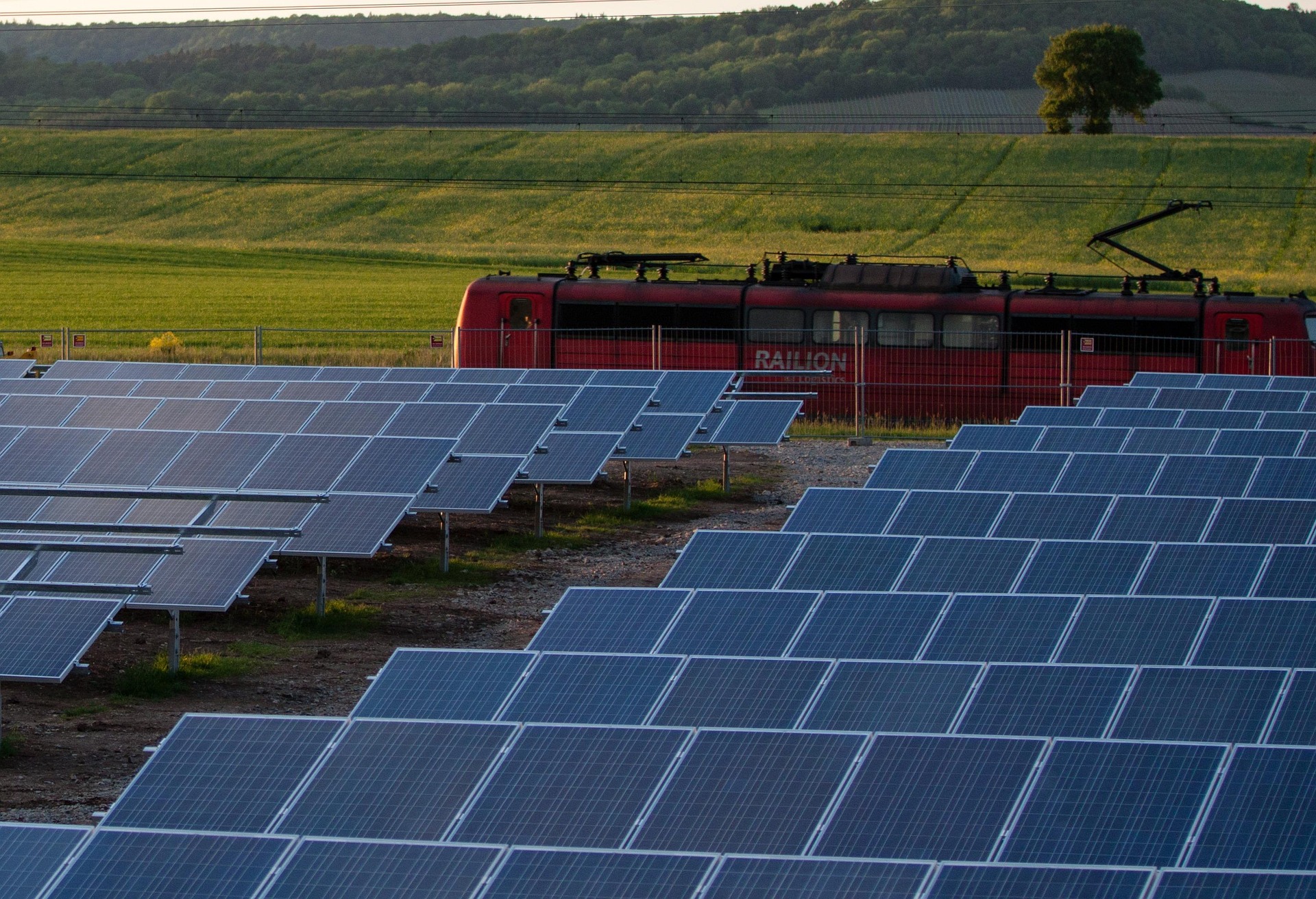
Solar panels: mounted on your roof, producing 400 to 550 watts each. The number you need depends on your daily electricity use.
Hybrid inverter: converts solar DC electricity into AC for your appliances and manages the flow between panels, batteries, and the KPLC grid automatically. The hybrid inverter is the right type for Kenyan homes — not a grid-tied inverter, which goes dark during blackouts.
Lithium battery bank: stores electricity for evenings and outages. LiFePO4 batteries is the only type worth buying in 2026 — it lasts 10 to 15 years and tolerates Kenya’s heat far better than lead-acid alternatives.
Charge controller: regulates charging to prevent overcharging — built into most modern hybrid inverters.
Mounting hardware, cabling, and installation: brackets, DC and AC wiring, isolators, and certified labour. This is where corners are most often cut — and where the consequences are the most dangerous.
Panels are only 30 to 40 percent of total cost. The battery bank is usually the most expensive component. Battery brand and type tells you almost everything about what a quote is actually offering.
Read: Solar Power as a Solution to Dumsor in Ghana: A Complete Guide
Full Solar Kit for Kenyan Homes — January 2026
Therefore, how much does a full solar kit cost in Kenya? We are about to learn that right now.
These are real installed prices including all components and labour. Use them as honest reference ranges — not fixed quotes.
Starter System — 1.5 kW to 2 kW
Installed price: KSh 135,000 to KSh 220,000
What it runs: LED lighting, Wi-Fi router, TV and decoder, phones and laptops, a small fan
Kit includes: 3 to 4 panels, 1.5–2 kW hybrid inverter, 50–100Ah lithium battery, mounting, wiring, installation
Small Home System — 3 kW
Installed price: KSh 280,000 to KSh 380,000
What it runs: Everything above plus a medium fridge running through the night, 3 to 4 rooms of lighting
Kit includes: 6 to 8 panels, 3 kW hybrid inverter, 100Ah lithium battery, full mounting, wiring, installation
Standard Home — 5 kW Most Popular
Installed price: KSh 385,000 to KSh 550,000
What it runs: Full house: fridge, freezer, fans, TV, Wi-Fi, device charging, washing machine during solar hours
Kit includes: 10 to 12 panels, 5 kW hybrid inverter, 200Ah lithium battery, isolators, cabling, full installation
Large Home — 7.5 kW to 10 kW
Installed price: KSh 560,000 to KSh 850,000
What it runs: Large home with single AC unit during solar hours, electric geyser on timer, multiple fridges, home office
Kit includes: 14 to 20 panels, 7.5–10 kW hybrid inverter, 300–400Ah lithium battery, earthing, full installation
For reference: Voltmatic Energy Solutions lists their 5 kVA at KSh 385,000 and 10 kVA at KSh 770,000 — consistent with Kenyan market pricing in January 2026.
Read: How Renewable Energy Works for Beginners
Why Two Quotes for the Same System Differ by KSh 100,000
There are three things responsible for the price gaps.
- Battery Used: lead-acid costs less upfront but lasts only 2 to 4 years in Kenya’s climate; lithium lasts 10 to 15 and is cheaper calculated over a decade. Always ask the propose battery type before accepting any quote.
- Panel brand determines whether the 25-year warranty is real. Tier 1 manufacturers — JinKo, LONGi, Trina, Canadian Solar — have the standing to honour it. Unknown brands rarely do. Inverter brand determines local support: Victron, Sunsynk, Deye, and Growatt all have Kenyan distributor networks. A no-name inverter saves KSh 20,000 on the quote and costs three times that when it fails in year two with no technician available.
- Installation quality is invisible in a photo but shows up in year three. Correct cable sizing, a DC isolator on the roof, proper earthing, and a compliant DB connection are what certified work looks like. Always verify the installer’s EPRA registration number before signing.
Does the Money Actually Make Sense?
Once KPLC adds its fuel energy charge, forex adjustment, REP levy, ERC levy, WARMA levy, and 16 percent VAT, residential electricity in Kenya lands at roughly KSh 25 to KSh 28 per unit. A household using 150 units monthly spends around KSh 52,000 on KPLC every year.
A KSh 420,000 solar system saves most of that bill from day one. Add generator fuel — another KSh 2,000 to KSh 5,000 monthly — and payback shortens to five years or less. After that, 17-plus years of near-free electricity. KPLC tariffs have risen 45 percent since 2022 and show no sign of reversing. Every year you wait, you pay a higher rate while the investment that would have freed you from it sits unbought.
The appliances KPLC voltage spikes destroy — fridges, microwaves, water pumps — are a hidden cost that never appears in your bill but is very real in any Kenyan household.
Read: Why Solar Panels Lose Efficiency (And How to Fix It Fast)
You Do Not Have to Pay It All at Once
Bank solar loans: KCB, Equity, Stanbic, and others offer 12 to 48-month loans. Repayments on KSh 400,000 over 36 months are often lower than the KPLC and generator bill they replace.
Microfinance options: Juhudi Kilimo and similar lenders serve households outside cities with flexible collateral requirements.
VAT and duty exemptions: the Kenyan government has removed VAT and import duty on solar panels and several related components, meaningfully reducing costs on officially imported equipment.
The practical test: add your monthly KPLC and generator spend. If a solar loan repayment is lower — which it often is — the system pays for itself from month one.
Read: Off-Grid Solar Solutions in Uganda: A Complete Guide
Frequently Asked Questions
What is the cheapest full solar kit cost in Kenya?
A complete full solar kit cost in Kenya with a professionally installed system with lithium backup starts at around KSh 135,000 to KSh 150,000 for a 1.5 kW setup covering lights, a router, and device charging. Below this price, you are typically looking at lead-acid batteries, missing components, or uncertified installation.
How many solar panels do I need for a 3-bedroom house in Kenya?
Most 3-bedroom homes need a 5 kW system with 10 to 12 panels. This covers lights, a fridge, fans, TV, Wi-Fi, and device charging day and night. Geysers and air conditioning require a larger system or daytime-only use.
Do I need KPLC permission to install solar in Kenya?
Not for a backup or off-grid system — the most common residential choice. You connect it to your internal wiring and you are done. Grid-tied net metering systems require KPLC registration, but most homeowners choose hybrid backup systems that do not.
How long does a solar system last in Kenya?
Quality panels carry 25-year warranties and typically last 30 years. LiFePO4 batteries last 10 to 15 years. Inverters from established brands last 10 to 15 years. One battery replacement is typical over the system’s life — making this a genuine 25 to 30-year investment.
Is there a government solar subsidy in Kenya in 2026?
No direct cash subsidy currently. The government has removed VAT and import duties on panels and related components, reducing costs. KOSAP targets specific rural areas with subsidised systems. Government-backed solar loans are available through several banks — check with EPRA for eligibility.
What should I ask a solar installer before signing?
Ask for a fully itemised quote with every component brand listed. Verify the EPRA registration number. Ask for two customer references. Ask what the battery chemistry and cycle life rating are. A reputable installer answers all of this without hesitation.
Conclusion
A full solar kit cost in Kenya in 2026 costs between KSh 135,000 for a basic backup system and KSh 850,000 for a large home. The most popular choice — a 5 kW hybrid system with a 200Ah lithium battery and 10 to 12 panels — sits between KSh 385,000 and KSh 550,000 installed. It handles the full household load through daily outages with room to spare.
Those numbers feel large until you count what you already spend. KPLC tokens, generator fuel, appliances destroyed by surges and more.
Meanwhile, a solar loan repayment often costs less, and unlike a KPLC bill, it ends.
Related reading:
Solar Panel Maintenance Tips for Africa
How Renewable Energy Works for Beginners
Best Portable Solar Generators for Africa 2026
Note: All prices reflect January 2026 market data from Kenyan solar companies.
Obtain at least three quotes from EPRA-registered installers before purchasing choice.
This article may contain affiliate links.